
“Safari Ward: A Travel Nurse in Kenya’s Great Migration Season”
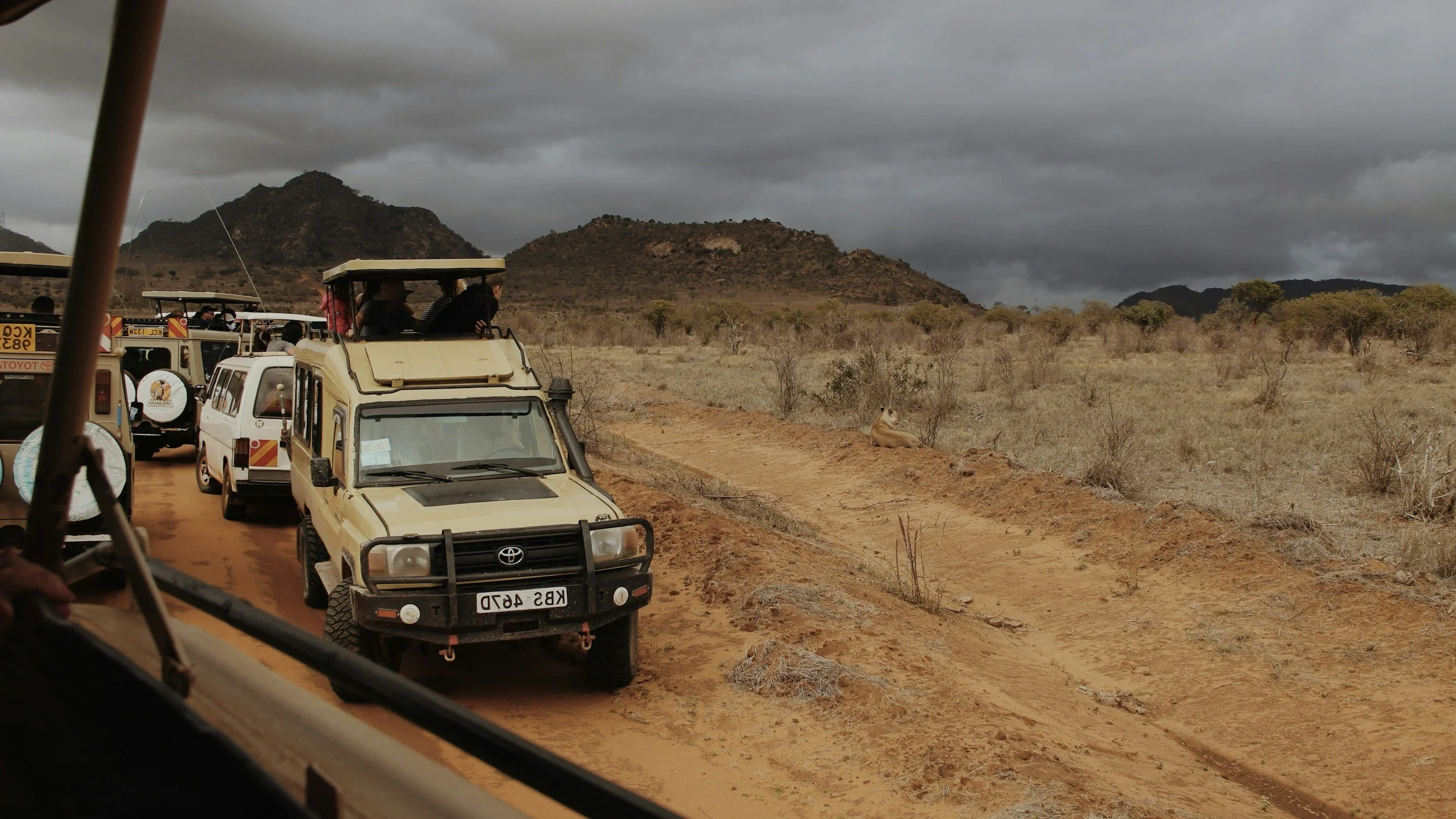
Travel Nursing in Kenya
A Complete Adventure Novel
TABLE OF CONTENTS
Introduction
Prologue — The Call to Depart
Chapter 1 — Arrival in the Mara
Section I: Touchdown in Nairobi
Section II: Overland to the Savannah
Section III: The First Night at Safari Ward
Chapter 2 — The Wildlife Corridor Clinic
Section I: The Converted Shipping Container
Section II: First Patients
Section III: A Ranger With Sharp Eyes
Chapter 3 — Storm Over the Grasslands
Section I: Flash Flood Warnings
Section II: The Stranded Herd
Section III: A Midnight Rescue
Chapter 4 — The Rhino Poacher Incident
Section I: Emergency Alarms
Section II: The Wounded Ranger
Section III: Tracking the Trail
Chapter 5 — The Mobile Vaccination Trek
Section I: Into the Loita Hills
Section II: Encounters Along the Trail
Section III: A Village Celebration
Chapter 6 — River of Giants
Section I: The Great Crossing Begins
Section II: The Capsized Photographers
Section III: Levi’s First Aid at the Riverbank
Chapter 7 — The Night of the Lioness
Section I: Cattle Panic
Section II: The Unexpected Visitor
Section III: A Lesson in Fear and Respect
Chapter 8 — The Rift Valley Dispatch
Section I: A Dangerous Transfer
Section II: Highway Troubles
Section III: The Cliffside Extraction
Chapter 9 — The Fire on the Plains
Section I: Dry Grass Season
Section II: The Race Against the Flames
Section III: Ash and Realization
Chapter 10 — The Last Migration
Section I: Decisions at Dawn
Section II: Farewell Round at Safari Ward
Section III: The Promise Under the Acacia Tree
Conclusion
Epilogue — The Return Journey
Reference List
Introduction
The Assignment That Changed Everything
Travel nursing was never designed for comfort. It was built for movement, for adaptability, for stepping into unfamiliar hallways with confidence and stepping out again before permanence could take hold. Elena Morales had mastered that rhythm. Contract after contract, she navigated emergency departments, rural clinics, and understaffed hospitals across continents, learning protocols quickly and earning trust faster. The transient nature of her work suited her. It allowed her to avoid lingering attachments while still fulfilling her calling to heal.
Organizations like the World Health Organization frequently highlight the global need for mobile healthcare professionals in underserved regions, where short-term deployments can stabilize fragile systems and deliver urgent care. Elena embraced that mission in theory. In practice, she preferred the clean exit: complete the contract, leave gratitude behind, and move on before the goodbyes grew heavy. Her colleagues sometimes joked that she collected hospital badges the way others collected postcards. She laughed along, dismissing the quiet truth beneath their teasing. Movement kept her safe. Roots, she believed, complicated things. When she accepted a contract in Kenya’s Masai Mara during the peak of the Great Migration, she imagined another temporary chapter—intense, perhaps even beautiful—but still temporary. She did not yet understand that this landscape would refuse to remain a brief stop on her itinerary. (World Health Organization, 2023)
Arrival in the Masai Mara
The Masai Mara was unlike any assignment Elena had ever accepted. Located in southwestern Kenya and contiguous with Tanzania’s Serengeti National Park, the Maasai Mara National Reserve is renowned for the Great Migration, a sweeping movement of over a million wildebeest and zebras across vast savannahs in search of grazing land. The migration transforms the plains into a living, breathing river of hooves and dust, drawing predators, tourists, conservationists—and in this case—a temporary medical clinic established to support local Maasai communities and seasonal workers. Elena’s small aircraft dipped over endless golden grasslands scattered with acacia trees, the horizon shimmering in afternoon heat. From above, it looked serene, almost timeless.
On the ground, however, life pulsed with unpredictability. The clinic was modest—solar-powered, minimally supplied, and often dependent on unreliable transport routes. Flash floods could isolate villages within hours. Wildlife occasionally wandered dangerously close to settlements. Poaching tensions simmered in the background, creating risks not just for animals but for people caught in the crossfire of conservation conflicts. Elena quickly realized that this was not merely an international assignment; it was immersion into an ecosystem where human health, wildlife survival, and environmental forces intertwined daily. Medicine here was not confined to sterile rooms; it existed in open-air tents, in mud-floored huts, and sometimes under vast skies streaked with migrating birds. (Maasai Mara National Reserve, n.d.; Serengeti National Park, n.d.)
When Medicine Meets Wilderness
During the peak of the Great Migration, the boundaries between healthcare and wilderness blurred in ways Elena had never experienced. Injuries ranged from motorbike accidents on unpaved roads to dehydration among herders trailing livestock across scorching plains. Some evenings brought cases of wildlife encounters—rare but serious—where swift improvisation meant the difference between stabilization and tragedy. Global health deployment frameworks, often supported by entities such as the Médecins Sans Frontières, emphasize adaptability in austere environments, but textbooks could not replicate the lived complexity of treating patients while listening for distant thunder signaling flash floods.
Elena learned to assess not just symptoms, but context: Was a child’s respiratory distress linked to infection or to smoke inhalation from cooking fires trapped inside poorly ventilated homes? Would a pregnant woman return for follow-up care if heavy rains washed out the only passable road? Healthcare decisions required environmental awareness, cultural humility, and creative resource management. The Maasai people she served carried traditions deeply rooted in pastoral life, and Elena discovered that healing involved listening before prescribing. She began to see that her role extended beyond clinical intervention—it required partnership, trust-building, and respect for a worldview shaped by generations of coexistence with land and wildlife. The savannah was not a backdrop; it was an active participant in every diagnosis and decision. (Médecins Sans Frontières, 2023)
The Healer Transformed
As days turned into weeks, Elena felt something unfamiliar taking root. The “moving life” that once protected her began to feel incomplete. In the Maasai Mara, departure was never simple. Each sunrise over the plains carried weight. Each patient encounter felt layered with shared vulnerability. The dangers—floodwaters rising without warning, the distant echo of gunshots from anti-poaching patrols, the ever-present unpredictability of wildlife—forced her into heightened awareness, sharpening her clinical instincts and deepening her empathy. Yet the most transformative element was not the risk; it was connection.
Elena found herself staying longer after consultations, listening to stories about cattle, drought, and ancestral lands. She learned fragments of Maa phrases. She joined community gatherings under starlit skies brighter than any she had seen in urban centers. In serving others, she confronted the avoidance she had long disguised as independence. The assignment revealed a truth she had not anticipated: healing does not end with the patient. The healer, too, is reshaped—by landscape, by community, by courage tested and compassion expanded. The Masai Mara was not merely another contract. It was a reckoning with purpose, identity, and the realization that sometimes the greatest journey is not across borders, but inward. (World Health Organization, 2023)
PROLOGUE — The Call to Depart
Introduction: 3:17 A.M.
It was 3:17 a.m.—that suspended hour when the world feels stripped of pretense and the mind refuses to be quiet. Elena Morales lay on her back staring at the ceiling, watching faint headlights sweep across her apartment walls from passing cars below. Her hospital shift in Portland had ended hours ago, but the rhythm of it still pulsed in her body: cardiac monitors chiming, ventilators sighing, the murmur of hurried consultations under fluorescent light. Sleep would not come. The scent of antiseptic seemed permanently woven into her senses. She rolled onto her side, tugging the blanket higher, determined to force rest. That was when her phone buzzed. Once. Then again—short, insistent, purposeful.
She ignored it at first. Nothing good ever arrived at that hour except emergencies. The vibration continued. With a tired groan, she reached for the device, squinting as the bright screen cut through the dark. The subject line stopped her breath: URGENT STAFFING NEED — Kenya Field Placement. Experience with wilderness medicine preferred. She sat up slowly, heart thudding in a way that had nothing to do with fatigue. Kenya. The word carried distance, heat, possibility. Her mind drifted to images she had once seen of the Maasai Mara National Reserve—vast plains and migrating herds under endless skies. According to the Kenya Wildlife Service, the region sits within one of the most ecologically significant wildlife corridors in East Africa, supporting communities who live alongside migratory routes. Elena blinked, grounding herself back in her dim apartment. This was not a documentary. It was a contract offer. And it had found her at 3:17 a.m., when defenses were thin and truths surfaced easily. (Kenya Wildlife Service, n.d.)
The Offer
She scrolled further. Duration: Six months. Setting: Hybrid wildlife corridor clinic and mobile outreach unit. Challenges may include environmental variability, animal proximity, limited infrastructure, and occasional remote emergency extractions. Her exhaustion evaporated, replaced by alertness sharp as adrenaline. Animal proximity? Her nursing textbooks had prepared her for trauma codes and septic shock—not for treating patients within reach of roaming wildlife. Yet something about the phrasing stirred a long-dormant hunger for uncertainty. The message referenced Great Migration season, the annual movement of more than a million wildebeest and zebras between Tanzania’s Serengeti National Park and Kenya’s Maasai Mara ecosystem.
The World Wildlife Fund describes it as one of the most spectacular natural events on Earth, a synchronized surge of life driven by rainfall and survival. Elena imagined thunder rolling not from clouds but from hooves. She pictured temporary clinics pitched near villages, outreach units navigating dirt roads cut by sudden rainstorms. The words remote emergency extraction replayed in her mind. She had built a career on adaptability, on stepping into chaos and finding order. But this felt different—less like controlled hospital urgency and more like surrendering to landscape and unpredictability. She realized she was leaning forward, elbows on knees, rereading each line. Her pulse was steady but fast, like the quiet anticipation before stepping into a trauma bay. The offer did not promise comfort. It promised immersion. (World Wildlife Fund, n.d.; Serengeti National Park, n.d.)
Jess in the Hallway
Behind her bedroom door, a hinge creaked. “Everything okay?” Jess’s voice was thick with sleep. Elena looked up to see her roommate silhouetted in the hallway, hair wild, oversized sweatshirt slipping off one shoulder. “Yeah,” Elena said automatically. “Just… an email.” Jess squinted. “At three in the morning?” When Elena said the word Kenya, the air shifted. Jess folded her arms. “You’re not seriously considering that.” It wasn’t accusation—more concern wrapped in fatigue. Elena hesitated. Her pattern was familiar: new contract, new city, new escape. She had told herself it was ambition. Growth. Professional curiosity. But beneath it lingered something less noble—a reluctance to stay long enough for anything to matter too deeply.
The World Health Organization often reports that rural and remote regions depend heavily on mobile healthcare professionals willing to work beyond conventional infrastructure, filling workforce shortages where local systems struggle to recruit permanent staff. Elena had read those reports before. She had even cited them when defending her career choices. But this felt less like professional mobility and more like invitation. Jess leaned against the wall. “You always run toward something new when things get complicated.” Elena didn’t deny it. Complications were harder to manage than clinical emergencies. Broken relationships did not respond to IV fluids. Grief did not stabilize with oxygen. She looked back at her phone, at the stark clarity of the offer. Kenya. Six months. Great Migration. “Maybe this isn’t running,” she said quietly. “Maybe it’s… moving toward.” Jess didn’t respond, but her silence held both skepticism and understanding. (World Health Organization, 2023)
The Decision
Alone again, Elena let the quiet stretch around her. She imagined dawn breaking over savannah grasslands, the sky wide and unfiltered by city skylines. She remembered a childhood library book about East African wildlife, its pages creased from rereading, the corners softened from small hands turning them over and over. Somewhere between adolescence and adulthood, that sense of wonder had narrowed into practical goals and manageable risks. The contract link glowed at the bottom of her screen. She thought about predictability—the security of familiar corridors, predictable paychecks, the comfort of knowing exactly where the supply closet was. Then she thought about the word corridor in a different sense: wildlife corridors, migratory pathways, invisible lines connecting survival to movement.
The Maasai Mara ecosystem, as documented by conservation authorities and regional agencies, functions precisely because movement is allowed—because life refuses to stay confined. Her breath slowed. Her pulse steadied into clarity. The assignment was not an escape from her life in Portland; it was an expansion of it. A deliberate step into discomfort, risk, and possibility. Before doubt could resurface—before practical fears lined up in orderly protest—her thumb pressed the screen. ACCEPT. The confirmation email arrived seconds later, stark and irreversible. In the hush of her apartment, under the pale glow of early morning, Elena felt the axis of her life tilt. Outside, the city remained asleep. Inside, something had awakened. A departure had been set in motion—not only across continents, but within herself.
CHAPTER 1 — Arrival in the Mara
Introduction: A Descent into the Unknown
Elena had traveled before—remote Alaska where snow swallowed sound, West Texas towns carved from oil and dust, even a floating clinic that rocked gently along the Pacific Northwest coastline—but nothing prepared her for the slow descent into Nairobi. As the plane dipped beneath a layer of sunlit clouds, the city revealed itself in fragments: corrugated rooftops flashing in the heat, highways threading through dense neighborhoods, and beyond them, unexpected stretches of open land that seemed to breathe differently from the concrete. Nairobi is often called the only capital city in the world with a national park within its boundaries—Nairobi National Park—a place where skyscrapers rise behind roaming giraffes. The paradox unsettled and intrigued her.
According to the Kenya Civil Aviation Authority, Jomo Kenyatta International Airport serves as East Africa’s busiest aviation hub, a gateway for diplomats, tourists, aid workers, and returning citizens. Yet for Elena, it felt less like a transit point and more like a threshold. Her contract packet had used sterile phrasing—“hybrid wildlife corridor placement,” “high-mobility outreach responsibilities”—language designed to sound manageable. But as wheels struck runway and reverse thrust roared through the cabin, she felt a pulse under her ribs that had nothing to do with turbulence. It was anticipation sharpened by vulnerability. Whatever confidence she carried from past assignments felt thinner here, stretched across a continent she knew mostly through books and documentaries. She pressed her palm to the window one last time before disembarking, silently acknowledging the gravity of the moment. Africa did not feel like a backdrop to her story. It felt like a presence—watchful, immense, waiting. (Kenya Civil Aviation Authority, n.d.)
Touchdown in Nairobi
The first breath outside the aircraft was warmer than she expected, laced with diesel exhaust and the faint sweetness of roasting maize from a vendor somewhere beyond the terminal walls. Inside the arrivals hall at Jomo Kenyatta International Airport, motion surged in waves—families reuniting, safari groups clustering in bright shirts, business travelers striding with purpose. Announcements echoed overhead in English and Swahili. The Kenya Airports Authority describes the airport as a central artery connecting global routes to regional destinations, and Elena felt that arterial energy in the constant flow of humanity around her. She tightened her grip on her duffel, reminding herself to appear confident even as everything felt amplified—the colors brighter, the conversations faster, the ceiling lights harsher against travel-worn eyes. “Elena Morales?” The voice cut cleanly through the noise.
A man stood holding a cardboard placard with her name scrawled in thick marker. He wore a faded blue shirt and carried himself with patient steadiness. “Karibu—welcome,” he said with a nod when she approached. His name was Henry. Outside, evening light settled over rows of idling taxis and tour vans painted with wildlife silhouettes. Their vehicle, an aging green Land Cruiser dusted red from past journeys, waited like a seasoned animal ready to move. As Henry loaded her bag among fuel canisters and supply crates, Elena sensed the first tangible shift from visitor to participant. The airport, with its polished floors and structured lines, belonged to the global world she knew. The road beyond it would belong to something else entirely. (Kenya Airports Authority, n.d.)
Overland to the Savannah
Leaving Nairobi unfolded gradually, the city thinning from glass towers to tin-roofed shops to open stretches of farmland. Boda bodas darted through traffic before fading behind them. Billboards gave way to acacia-dotted hills. Henry navigated with practiced ease, radio humming low with Swahili pop that dissolved into static as signal weakened. “First time?” he asked, amusement softening his voice. She admitted it was. “Everyone looks the same,” he chuckled. “Eyes too wide.” When the land opened into broad plains, she understood why. The ecosystem ahead connected seamlessly to Tanzania’s Serengeti National Park, forming one of the planet’s most significant wildlife corridors. The Maasai Mara Wildlife Conservancies Association notes that this region sustains both pastoral communities and migratory wildlife through carefully balanced land stewardship.
As if on cue, zebras appeared near the roadside, their stripes luminous in slanting light. Farther out, giraffes moved with deliberate grace, necks cutting elegant silhouettes against gold grass. Elena pressed her hands to the window, astonished by how casually wildness revealed itself. Henry’s tone shifted when he mentioned the Great Migration—millions of wildebeest crossing rivers swollen with rain, predators trailing close behind. “Biggest show on earth,” he said. “Also most dangerous.” Dust rose behind them as they turned onto a rutted dirt road mapped seasonally by conservancy patrols. Elena felt wonder braided tightly with apprehension. The clinical unpredictability she knew from emergency rooms would now be matched by environmental volatility—storms, animals, terrain. The savannah did not promise stability. It promised immersion. (Maasai Mara Wildlife Conservancies Association, n.d.)
The First Night at Safari Ward
Darkness arrived quickly, swallowing the horizon in indigo. By the time they reached the ranger outpost bordering the Maasai Mara National Reserve, stars had erupted across the sky in impossible density. Elena stepped from the Land Cruiser into air alive with insect hum and distant animal calls that raised goosebumps along her arms. The clinic—nicknamed Safari Ward—stood beside the outpost: a reinforced shipping container elevated slightly above the ground, solar panels angled toward moonlight. According to regional mobile health frameworks supported by Kenya’s Ministry of Health, modular clinics like this expand access in remote zones where permanent infrastructure is impractical. Inside, two exam cots faced neatly organized shelves of labeled medications.
A compact monitor blinked quietly beside a lantern casting warm light over metal walls. Sparse yet purposeful. Footsteps approached. A tall ranger in green fatigues paused at the entrance. “Levi,” he introduced himself, handshake firm and steady. He coordinated patrol communications and emergency transport. His presence radiated vigilance—the kind earned from scanning horizons daily. “Brave timing,” he noted when she mentioned migration season. Outside, something rustled in tall grass, heavy enough to command attention. Levi subtly shifted his stance between her and the door until the sound faded. “Zebra,” he said after a moment. “Probably.” The word probably lingered longer than comfort allowed. Elena inhaled deeply, tasting dust and night air. The world she had entered pulsed with unpredictability, yet beneath the uncertainty was clarity: she was exactly where she needed to be. The savannah stretched unseen beyond the clinic walls, immense and indifferent, yet somehow welcoming. Her arrival was complete—not just geographically, but inwardly. (Maasai Mara National Reserve, n.d.)
Link back to Top of FREE content
Read more content in the Member’s Area