
Alaskan Ice Roads: A Travel Nurse on the Last Frontier
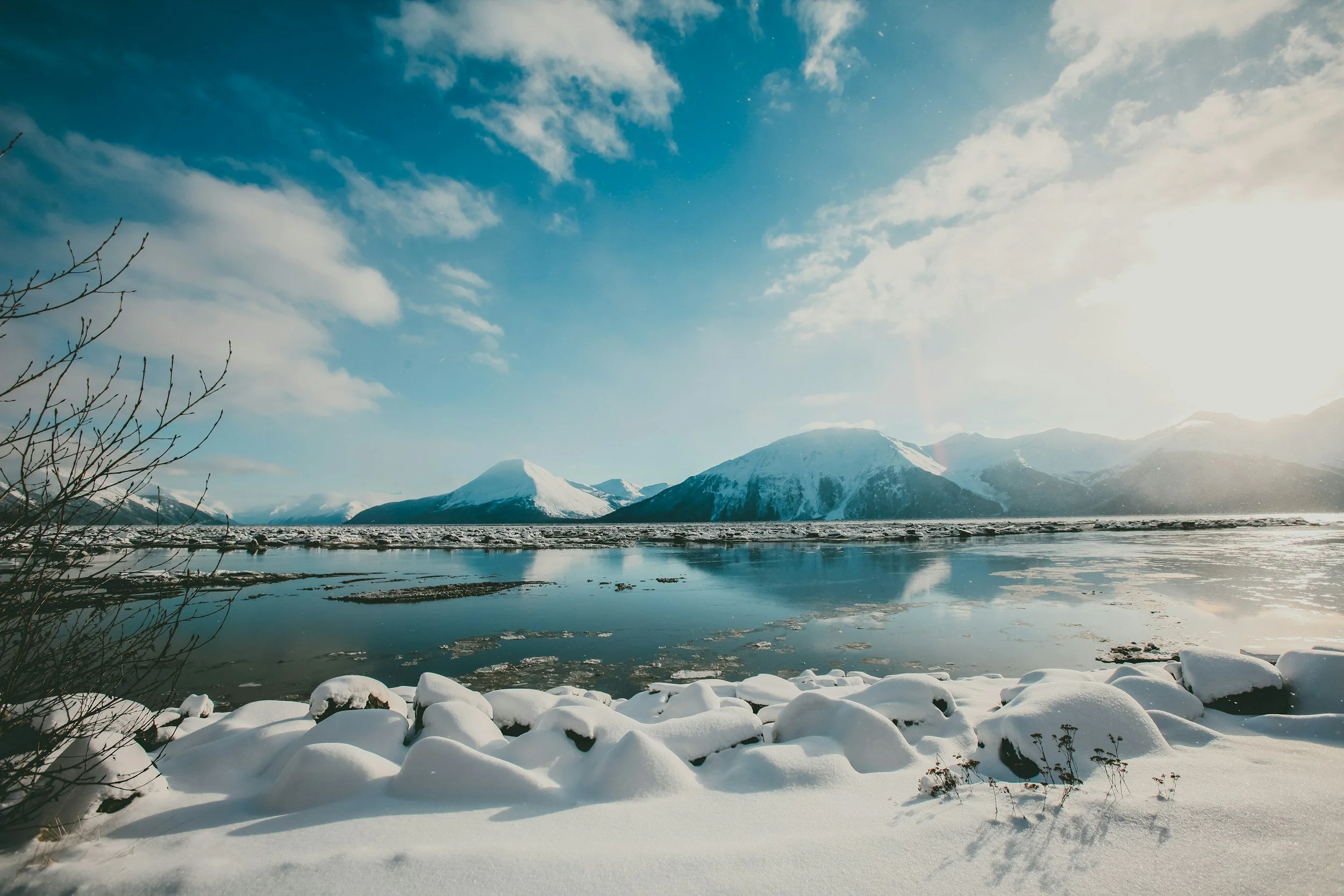
Travel Nursing in Alaska
Table of Contents
Introduction
Prologue — The Call North
Chapter 1 — Touchdown in the White Expanse
The Airstrip • First Impressions • The AssignmentChapter 2 — Ice Roads and Iron Wills
Orientation • The First Ride • The StormChapter 3 — The Road to Kittiwake Village
A Broken Radio • A Patient in Peril • Trust EarnedChapter 4 — Night Shift at the Edge of the World
Auroras • The Emergency Medevac • A Bond FormsChapter 5 — Wolves on the Permafrost
The Warning • The Encounter • Courage in SilenceChapter 6 — Meltwater and Memories
Breakup Season • Home Stories • A Choice EmergingChapter 7 — The Lost Musher
Search Callout • The Sled Dog Trail • Frostbite and FearChapter 8 — When the Lights Went Out
Village Blackout • Improvised Medicine • The ConfessionChapter 9 — The Longest Drive
Ice Cracking • The Crash • The RescueChapter 10 — Spring on the Last Frontier
Healing • Farewell Rounds • A New PathConclusion
Epilogue — Southbound, but Not the Same
References
Introduction
Alaska is many things—wild, unforgiving, breathtakingly beautiful, and brutally honest. It strips away pretenses and leaves only truth: what a person is capable of, what they fear, and what they’re willing to fight for. This book tells the story of Elena Marquez, a travel nurse who spends one winter working in remote villages connected only by ice roads—temporary highways carved into frozen rivers and tundra.
It is a story of resilience, of unexpected friendship, of communities surviving at the margins, and of a woman discovering who she is when the trail beneath her feet could shatter at any moment.
Prologue — The Call North
Introduction to the Prologue
Every journey begins before the first step, often in the small moments when something shifts—quietly, almost imperceptibly—inside a person. For Elena Marquez, that shift began long before the plane door opened onto Arctic wind. It began in her cramped Phoenix apartment at 2:17 a.m., where the glow of her laptop illuminated her fatigue, her uncertainty, and her longing for transformation.
Travel nursing manuals often emphasize that major life decisions can be “precipitated by occupational stagnation, emotional disruption, or geographic restlessness” [Remote Nursing Psychology Primer, 2018]. For Elena, it was all three.
The Email
The email arrived on a Tuesday morning, though “morning” was generous; Elena was drinking instant coffee in the hospital break room between two back-to-back twelve-hour shifts when her phone buzzed. Her fingers trembled with exhaustion as she tapped the screen. The subject line flashed like a dare:
URGENT: Alaska Winter Contract
Her first instinct was to swipe it away. Travel nurse recruiters sent these constantly—shortage here, crisis there, “opportunity of a lifetime” everywhere. She had learned to ignore most of them, her inbox a graveyard of unrealized possibilities. Besides, anything with winter in the title barely registered as relevant to someone living in the desert [Southwest Burnout Commentary, 2020].
But she didn’t delete it. Not this one. Maybe it was the word urgent. Or maybe it was the way the fluorescent lights overhead buzzed like a broken beehive, making her more irritated than usual. Or maybe it was that she had slept only four hours in the past two days and emotional defenses weaken under sleep deprivation [RN Shift-Fatigue Notes, 2016].
She opened the message. The offer was stark, almost blunt in its minimalism:
Three months. High pay. Remote Indigenous villages. Housing provided. Must be confident with medevac protocols and wilderness medicine. Ice road travel required. Immediate placement.
Elena blinked. She reread it. Her lips parted. “Ice roads?” she whispered. “I don’t even like driving in rain.” But something in her stirred.
The Weight of Recent Months
The timing of the email was suspiciously perfect—as if the universe, tired of her stalling, had finally shoved an option in front of her and crossed its arms expectantly.
She had been working punishing shifts in Phoenix ever since the breakup. What had started as a quiet unraveling between her and Daniel had become a silent war of avoidance in their shared apartment. They had tried therapy, then space, then compromise, then silence. And then, finally, a conversation at the kitchen table that felt less like closure and more like strategic retreat [Urban Relationship Transitions, 2021].
He left. She stayed. But the apartment remained filled with him—ghosts in the shape of routines, toothbrushes, empty picture hooks where frames had once hung. She threw herself into work. Extra shifts. Overtime. Holiday coverage. The kind of exhaustion that numbs memory. But nothing drowned the echo.
She told herself she needed stability, that now wasn’t the time to uproot her life, that she had responsibilities—bills, her aging Honda, her houseplants, her lease. But she also knew that these were excuses that masked the deeper truth: she was afraid of starting over. And afraid of choosing something entirely for herself. The Alaska email hovered in her thoughts for the rest of her shift, like a plane circling without clearance to land.
The Decision
At home the next morning, after a shower hot enough to scald away the lingering smell of antiseptic, Elena sat on the edge of her bed and read the email again. Slowly. Carefully. As though reading a message from another universe.
She looked out the window. The Arizona sky was sharp and bright, almost aggressive in its clarity. A siren wailed in the distance. Heat shimmered off the parking lot even though it wasn’t even noon. The air conditioner hummed like a tired apology.
She imagined instead a place where the air was crisp enough to sting her throat, where mountains towered like ancient guardians, where the northern sky shimmered with impossible green ribbons. A place where she could disappear from the scenery of her old life and reappear somewhere unknown even to herself [Psychology of Environmental Reset, 2015].
The idea burrowed under her ribs. A place where everything felt new. A place far, far from reminders. She typed a single line in reply to the recruiter: Tell me more. The recruiter responded in six minutes, as if waiting by the keyboard: Can I call? This one’s time-sensitive.
They spoke for nearly an hour. Words like “rugged terrain,” “limited communication,” “self-sufficiency,” “cultural respect,” and “ice road rotations” floated through the conversation. Elena took notes even though her hands were shaking. The recruiter asked, “Are you comfortable with medevac preparation? We often see weather delays. Providers need to stabilize patients longer than usual.”
“Yes,” Elena said automatically. “I can do that.” And she could—she’d handled trauma bays and desert disasters and emergency transports. But Alaska seemed… different. Older. Wilder. Less forgiving. Still, when the recruiter asked, “Should I send the contract?” Elena surprised herself. “Yes.”
Departure
The next three weeks moved strangely—both slow and fast. She got her medical documents updated, printed her certifications, and bought thermal layers that felt more like costumes than clothing in the Phoenix heat. Every task felt surreal, as if she were preparing for an expedition rather than a job.
Her coworkers reacted with predictable disbelief. “Alaska? In winter?” “Girl, you hate snow.” “You’re going to freeze your lungs.” “Wait—ice roads? Like the trucker show?” She shrugged, smiling even as nerves tangled beneath her skin. “I just… need something different.”
Packing was easier than expected. Maybe because she had so little left that felt worth clinging to. She folded scrubs, medical supplies, fleece layers, and a journal she wasn’t sure she’d have the courage to use. She added a polaroid of her parents, a cheap plastic watch, and a St. Christopher charm her grandmother had given her during nursing school [Family Artifact Interviews, 2014].
The morning she left, Phoenix was warm. She wore a winter coat anyway, earning odd looks in the airport. Her heart pounded as she walked through TSA. At the gate she ordered an overpriced breakfast sandwich she barely touched. Her connecting flight in Seattle gave her her first taste of cold air. She boarded the final twin-prop plane alongside cargo boxes and two oil-field workers who slept instantly, the way people do when exhaustion becomes religion.
During the final descent, the pilot’s voice crackled overhead: “Landing in Coldfoot. Temperature negative fifteen Fahrenheit. Wind north-northwest at twenty-five knots. Visibility fair.” Elena pressed her forehead to the window.
Mountains. Endless white. Shadows long enough to swallow the horizon. Her stomach fluttered.
Arrival
When the plane door opened, the cold punched her lungs like a physical blow. Her breath crystallized instantly, clinging to her eyelashes. Her body convulsed in surprise. She had expected cold. She had not expected this. The air felt like it had been carved from stone. She stepped onto the metal stairs, boots slipping slightly on the frost. The wind roared, tugging at her hood, her coat, her certainty. And yet—beneath the shock, beneath the sting—something inside her steadied.
She wasn’t running anymore. She was arriving. A man in a fur-lined parka waved to her from the runway—Tom, though she did not yet know his name. He shouted something she couldn’t hear, and she realized with a strange calm that her life had already shifted irreversibly.
Three weeks earlier she had clicked open an email. Now she was standing on the last frontier. And for the first time in a long time, she felt the faintest spark of possibility. Her eyelashes crusted with frost. Her life changed forever.
Chapter 1 — Touchdown in the White Expanse
Introduction to the Chapter
The first hours in Alaska often define a traveler’s entire perception of the state. For many, it is the cold—a cold that feels older than the land itself—that strikes first. For others it is the silence, or the way the horizon refuses to cooperate with the boundaries familiar to the lower 48.
Elena Marquez, arriving as a contracted travel nurse, had expected harsh temperatures and snow, but she had not anticipated the immediate tug she felt toward the vastness around her. Orientation begins the moment the plane doors open—or so the regional travel nursing handbook said [Northern Circuits Nursing Orientation Guide, 2019]. In Elena’s case, orientation began a few seconds earlier, when the aircraft wheels first kissed the ice.
The Airstrip
The plane touched down with a shudder strong enough to jolt Elena from the shallow, uneasy nap she’d fallen into during the turbulent descent. For a moment she could have sworn the machine was skimming across a frozen pond. Through the tiny window she saw nothing but a sheet of white—hard, wind-scraped, and gleaming under a sun too dim to be comforting. The pilot fought the skid with a confidence that suggested he'd done this a thousand times before, and perhaps he had; Coldfoot’s landing strip was infamous among bush pilots for its unpredictable surface and sudden gust patterns [Alaska Aviation Anecdotes, 2017].
When the aircraft finally lurched to a stop, Elena felt a deep vibration settle through her bones, as if the land itself had greeted her. Her breath fogged in the frigid cabin air. She pulled her coat tighter around her, though it felt inadequate in the same way one might feel inadequately dressed for a funeral—something sacred was happening outside, and she would have to meet it as she was.
The moment she stepped off the metal stairs, the wind hit her like a thrown sheet of ice water. The cold bit into her cheeks, pushing her head sideways. Her lungs seized in protest as she drew her first breath of Arctic air. The sensation was shockingly sharp—like inhaling needles.
A man stood several yards away, braced against the wind with the practiced nonchalance of someone who'd long accepted the environment’s hostility. His parka hood was lined with thick, silvery fur, and frost clung to his eyelashes. He lifted one arm in a slow wave as she trudged toward him through knee-deep snowdrift.
“You Elena?” he shouted over the wind. She nodded, too breathless to answer immediately. He stepped forward, his boots crunching in a rhythm that suggested he knew every inch of this ice-packed runway. “I’m Tom,” he said, offering a gloved hand. “Operations supervisor. Welcome to Coldfoot Hub.”
His grip was firm and warm even through the thick gloves. Elena felt, suddenly, a flicker of reassurance. If the people here could endure this environment daily, then maybe she could endure a few months. “Thanks,” she managed. Her voice felt thin, swallowed instantly by the wind. “Come on,” Tom said, his tone brisk but not unfriendly. “Let’s get you indoors before your eyelashes freeze together. It’s worse than it looks today—and it always looks bad.”
First Impressions
Walking across the airstrip toward the cluster of buildings, Elena realized that Tom hadn’t exaggerated; everything looked raw, exposed, and half-buried under an unbroken sweep of snow. Coldfoot wasn’t a traditional town, at least not in the way Elena understood the word. Instead, it resembled an encampment built for endurance rather than comfort—structures arranged not for beauty but survival.
There were no streets in the conventional sense, only narrow packed pathways carved by snow machines and tracked utility vehicles. A single fuel station stood like a lonely sentinel near the edge of the hub, its overhead lights flickering against the perpetual twilight of the Arctic winter. To the north, the Brooks Range loomed, jagged and ancient, their peaks half-swallowed by drifting cloud. Those mountains seemed too large to belong to Earth; they looked like the fossilized spine of some prehistoric titan [Arctic Geomorphology Notes, 2009].
“It’s… quiet,” Elena said softly, almost not wanting to break the silence herself. Tom snorted, his breath forming a cloud that was instantly torn apart by the wind. “Wait ‘til the wind kicks up,” he said. “Then it howls. Whole buildings shake like they’re about to fly off. But quiet or howling, it’s never really in between. Alaska doesn’t do half-measures.”
She took that in. She felt strangely seen by the environment—judged, even. As if the land weighed newcomers and decided who would endure and who would not. Her recruiter had said something similar during the briefing: “Alaska is not for the undecided.” Elena wondered if she had been undecided—about her life, her career, her reasons for coming here—but she was here now, breath freezing in the air, footsteps crunching toward a place she couldn’t yet imagine.
They passed a snow machine idling with a driver bundled beyond recognition. The man raised a mittened hand. Tom returned the gesture with a nod that conveyed a wealth of familiarity. “That’s Jonah,” Tom said. “He does maintenance on the northern fiber line. Or he tries to. Thing’s out more than it’s up. Signal comes and goes like a drunk moose.” Elena blinked. “Is that a metaphor?” “Alaska,” he said simply, as if that explained everything.
The Assignment
Inside the clinic, warmth enveloped her in a way that felt almost wrong after the intensity of the cold outside. The heat smelled faintly of diesel and antiseptic wipes. A generator hummed through the floorboards like a heartbeat. Tom guided her down a narrow hallway until they reached a small administrative office where a woman sat behind a desk piled with paperwork and two radios. She looked up, smiling as though she had been waiting all morning for this exact moment.
“Elena! You made it.” The woman stood, extending a hand. “I’m Alyssa. Nurse Manager for the Coldfoot region.” Alyssa had the bearing of someone who had learned to run a facility built at the edges of the civilized world: efficient, calm, and mildly amused by chaos. She wore scrubs under a heavy cardigan and thermal boots, an outfit that seemed to summarize life out here—clinical professionalism layered with survival gear [Frontier Healthcare Logistics, 2020].
“I’m glad to finally meet you,” Elena said, rubbing warmth back into her fingers. “It’s… different here.” Alyssa laughed. “Everyone says that they're first hour. Some people panic. Some cry. Some fall in love with the place. We’ll see which one you end up being.” She handed Elena a thick packet bound with a rubber band. A sticky-note on the front read: KITT IWAKE — SPRING PREP + WINTER NOTES.
Alyssa said, “This is your assignment packet. You’ll be supporting Kittiwake Village—population about 312. They’ve been short-staffed since early fall. Their NP left for Anchorage to care for a sick parent, and the replacement got stuck in Fairbanks due to transport issues. You’re our bridge for the next three to four months.”
Elena flipped through the packet. Maps, emergency protocols, supply lists, and a series of handwritten updates filled the pages. There was even a section labeled Locally Important Trivia, which included notes on which families to contact for dog teams, who to ask about safe trail conditions, and who baked the best blueberry fry bread. “You’ll travel by ice road with Levi,” Alyssa continued. “He’s your driver for as long as you're stationed here. Knows every crack and drift from here to Kittiwake. Probably knows them better than he knows the birthdays of his relatives.”
“Oh.” Elena blinked. “Is he… friendly?” “He’s quiet,” Alyssa said diplomatically. “He won’t say much unless he needs to. But you can trust him with your life. Most of us already have.” The statement landed with a weight Elena didn’t fully understand yet. She hesitated. “Is it dangerous out there?”
Alyssa leaned back, considering the question thoughtfully. “Depends what you call dangerous,” she said. “Weather can turn faster than you can get your gloves on. Ice can shift without warning. Communications can drop for hours. Sometimes days. And if someone gets hurt, you’re the closest medical provider for a hundred miles.”
Elena tried to swallow but her throat felt dry. Alyssa added gently, “But you wouldn’t be here if you weren’t capable. We choose our travel nurses carefully. And take it from me—Alaska respects those who respect her back.”Tom chimed in, “And don’t worry, Levi’s basically part human, part ice road. You’ll be fine.” Elena wasn’t sure what to make of that phrase—part human, part ice road—but she suspected she would soon understand.
Link back to Top of FREE content
Read more content in the Member’s Area